
Scriptural Reasoning at CTI
Scriptural Reasoning is a form of interreligious engagement that emerged in the late 1990s, initially among Jewish and Christian scholars in the United Kingdom and soon expanding to include Muslim academics. Associated especially with luminaries such as Peter Ochs, David Ford, and CTI’s first director Daniel Hardy, the practice developed as a response to both the limits of purely theoretical dialogue and the realities of religious pluralism in contemporary societies. Rather than seeking consensus or doctrinal agreement, Scriptural Reasoning offers a disciplined, hospitable way for communities of faith to read their sacred texts together while remaining fully accountable to their own traditions.
Scriptural Reasoning is distinguished by its method. Small groups gather to read short passages from the Hebrew Bible, the New Testament, and the Qur’an, typically organized around a shared theme such as hospitality, justice, or mercy. Participants read closely, attend to interpretive differences, and speak from within their own traditions, often drawing on classical commentaries. Disagreement is not considered a failure but rather a resource for learning, honing interpretation, and deepening mutual understanding. Given its flexibility and appeal, the practice has generated a global network of scholars, students, clergy, and practitioners, as well as a substantial body of academic literature and institutional support, including the Scriptural Reasoning Society.
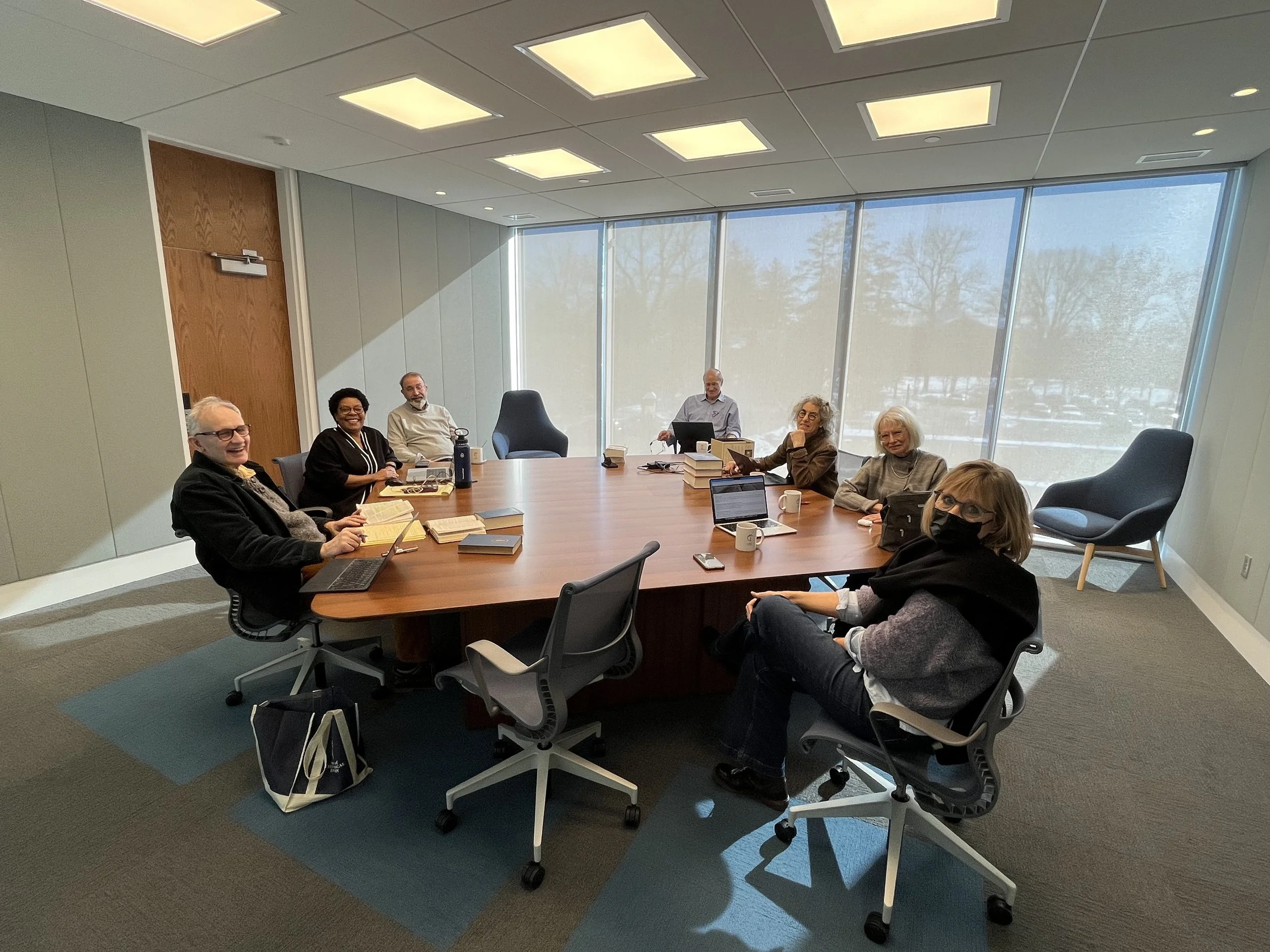
The Center of Theological Inquiry (CTI) has played a significant role in the development and flourishing of Scriptural Reasoning, serving as a key institutional home and convening partner for the practice. CTI has hosted Scriptural Reasoning seminars, fellowships, and collaborative research projects that bring Jewish, Christian, and Muslim scholars into sustained conversation around shared texts and urgent contemporary questions. This work aligns closely with CTI’s mission to foster rigorous theological inquiry across traditions and disciplines. Through its support of Scriptural Reasoning, CTI has helped demonstrate how careful, text-centered engagement can strengthen both academic scholarship and the public witness of religious communities in a pluralistic world.
Under the direction of experienced Scriptural Reasoner Tom Greggs, this winter CTI hosted Peter Ochs, Vanessa Ochs, David Ford, Deborah Ford, Valerie Cooper, Steven Kepnes, and Laurie Zoloth for its latest inquiry on Scriptural Reasoning. Devoting their mornings to Scriptural Reasoning and their afternoons to exploring possible future paths for the practice, the group also found plentiful opportunities for prayer and fellowship. Watch this space and look for forthcoming episodes of CTI’s Theology Matters podcast for reflections on Scriptural Reasoning from Peter Ochs and David Ford.