
AI Cohort’s Residential Semester Culminates with Special Guest
The Center of Theological Inquiry’s residential cohort on artificial intelligence (AI) concluded its spring semester on May 12 with a colloquy featuring philosopher, cognitive scientist, and former CTI resident member Susan Schneider. Director of the Center for the Future of AI, Mind, and Society, co-director of the Machine Perception and Cognitive Robotics Lab, and W. Dietrich Distinguished Professor of Philosophy at Florida Atlantic University, Schneider brought synoptic expertise and analytic rigor to the cohort’s deliberations concerning the theological, metaphysical, and ethical dimensions of AI.
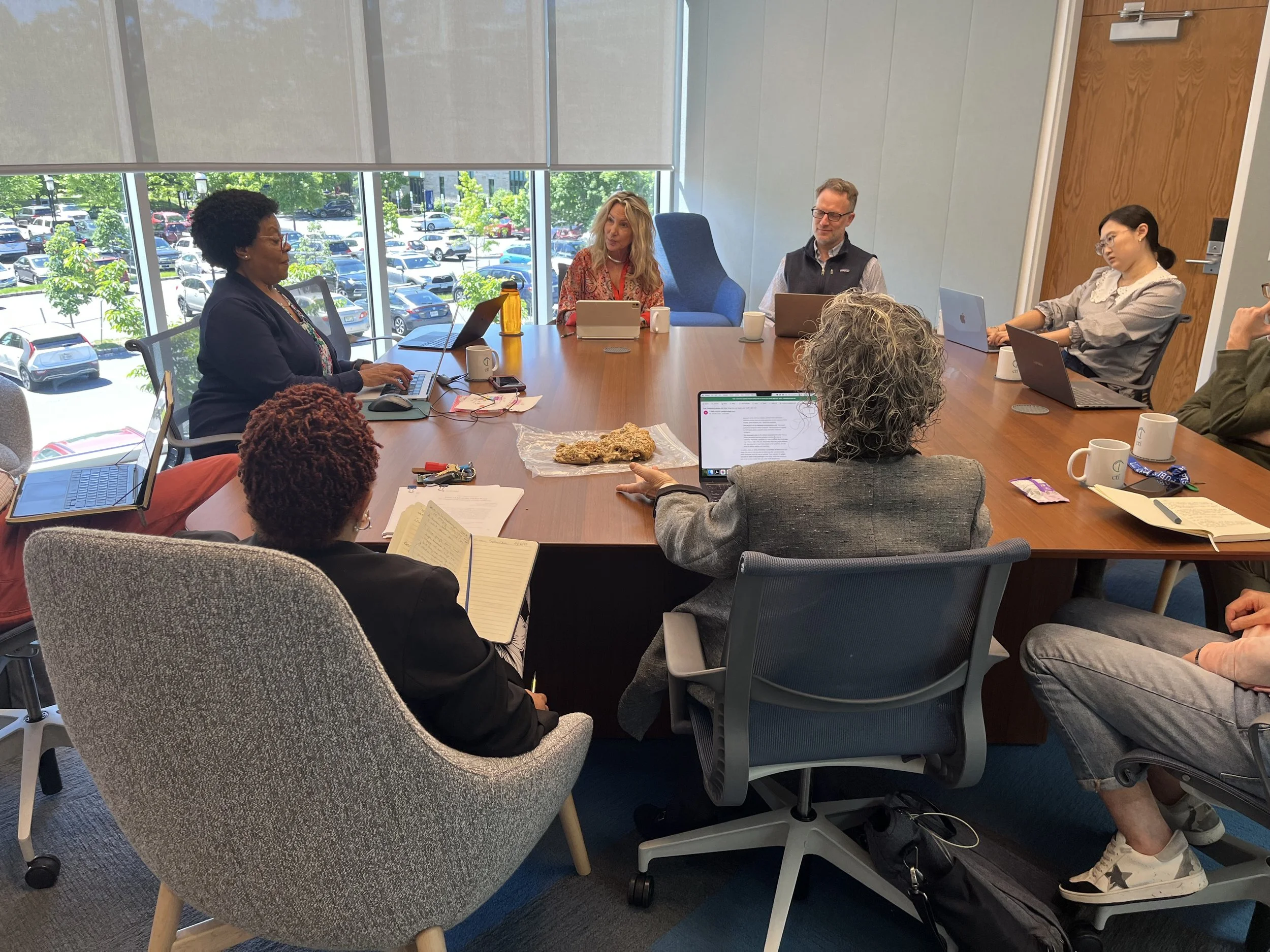
Schneider’s colloquy marked the culmination of months of in-person interdisciplinary collaboration and an important milestone in CTI’s broader “From Despair to Hope” project, a three-year research initiative convening successive teams of theologians, philosophers, ethicists, historians, scientists, and public intellectuals to build spiritual capital across the areas of technology and AI, civics and democracy, youth and education, health and medicine, and entrepreneurship and economics.
The AI cohort is the first of these teams, and throughout its residential semester in Princeton it harnessed an array of workshops, research seminars, and public-facing conversations to explore a range of questions regarding artificial intelligence and human flourishing, such as: Can theological anthropology help illuminate what distinguishes human consciousness from machine intelligence? What forms of political, social, and ecological disruption might accompany extant and increasingly powerful AI systems, and how might that disruption be most effectively and appropriately mitigated? How should religious and ethical traditions respond to the prospect of artificial general intelligence (AGI) and artificial superintelligence? And how might practices of spiritual formation and communities of moral commitment assuage growing technological pessimism?
Schneider’s colloquy addressed many of these queries directly. Drawing on her longstanding work concerning the nature of consciousness and the possibility of machine minds, she examined the conceptual, moral, and legal difficulties involved in attributing consciousness to AI systems. She also reflected on the risks associated with rapid AI development, including the possibility that commercial and geopolitical rivalries may outpace ethical deliberation and regulatory oversight.
Schneider’s discussion of her current research on AI chatbot epistemology and AGI enabled CTI cohort members to probe cutting-edge philosophical engagement with these proliferating and potential technologies. Schneider, in turn, challenged colloquy participants to consider not only the practical consequences of AI but also the conceptual assumptions shaping cultural narratives about intelligence itself. Schneider’s provocations naturally prompted consideration of the religious significance of various AI applications, including the extent to which people may be led to grant AI avatars or chatbots unwarranted spiritual authority.
While public discussion of AI frequently focuses on engineering capability, cyber vulnerability, economic dislocation, medical discovery, and political instability, CTI’s distinctive conception of theology as interdisciplinary inquiry led its AI cohort to foreground deeper questions concerning human dignity, responsibility, and thriving. That conception also allowed this cohort to enlist a diverse range of religious and academic perspectives in its efforts to foster forms of intellectual and moral discernment that can respond wisely to the rapid technological change that suffuses this era and exacerbates its despair.