
Case Study: Religion and Law

The Inquiry on Law and Religious Freedom
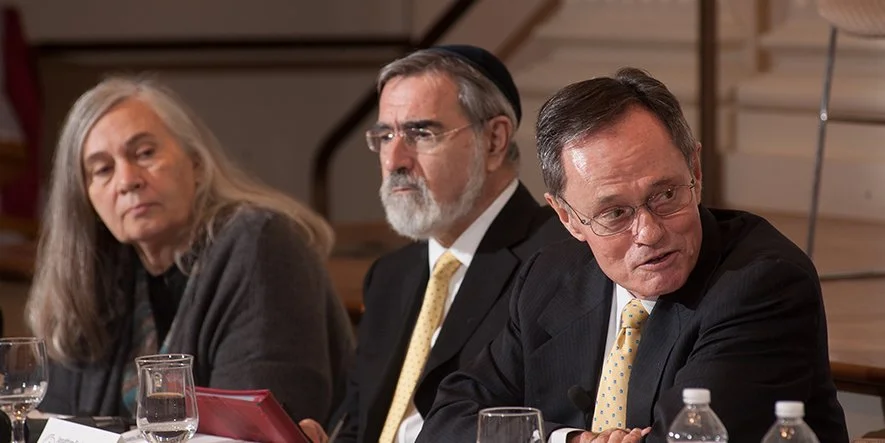
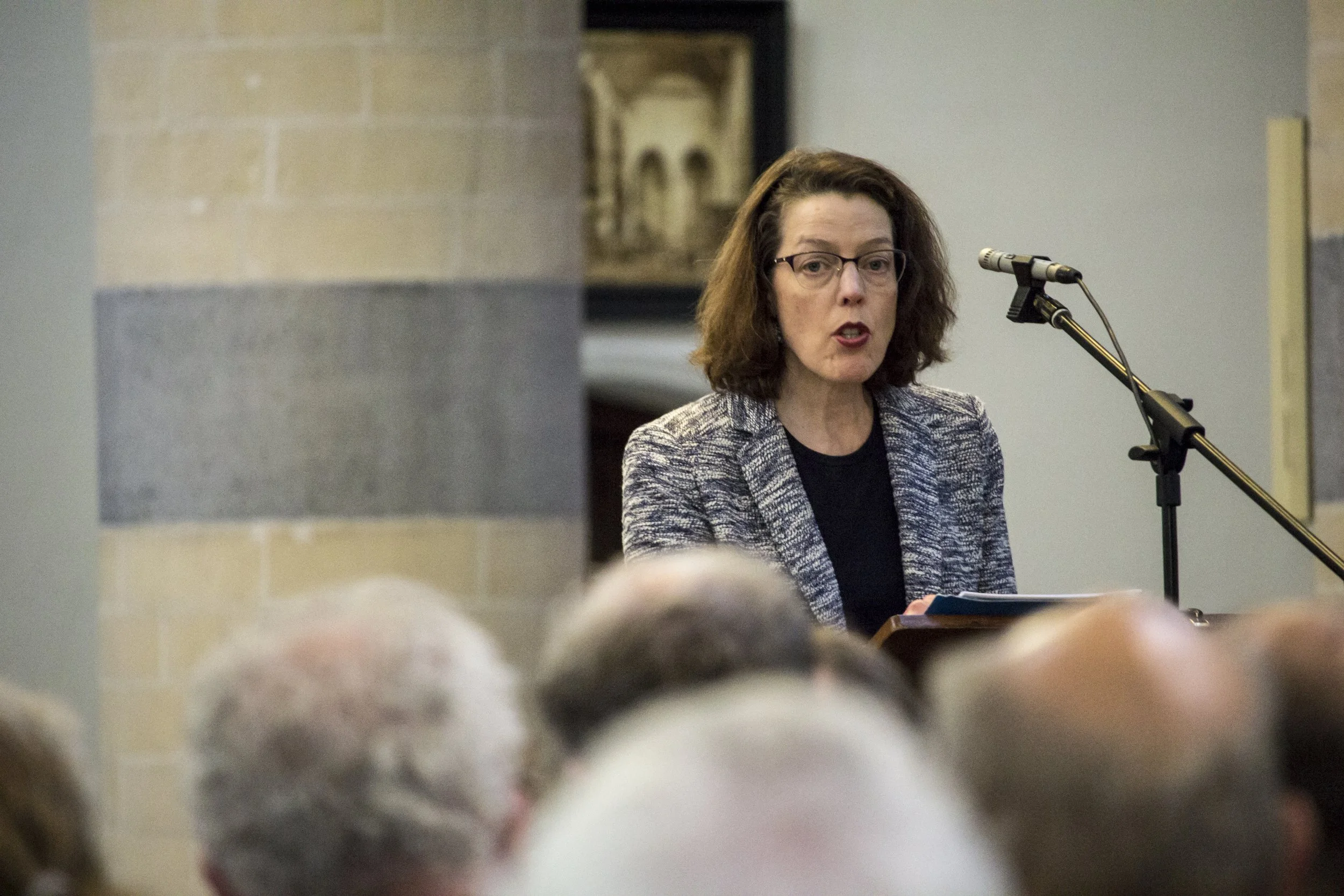
This decade of work culminated in CTI's landmark Inquiry on Law and Religious Freedom (2014–15). Conducted in partnership with Princeton University's Program in Law and Public Affairs, the Inquiry assembled leading scholars in law, theology, political theory, religious studies, and human rights from North America, Europe, Russia, China, the Middle East, and Africa. It examined questions that remain central to public life today: the rights of religious communities and individuals, constitutional interpretation, religious pluralism, secularism, democratic coexistence, and the role of religion in public institutions.
The Inquiry represented a distinctive model of research, involving a year-long residential community in which scholars could develop ideas over time, test arguments, and learn from one another across disciplinary and cultural differences. Participants repeatedly described the CTI environment as intellectually transformative, enabling forms of collaboration and creativity rarely possible within conventional academic structures.
Real-World Impact
The most enduring impact of CTI's work on religion and law has been the creation of intellectual resources that continue to shape public discourse and professional practice. The Inquiry generated books, articles, research programmes, lectures, and international collaborations that have informed academic discussions of religious freedom, human rights, constitutional law, and democratic pluralism. Scholars developed new frameworks for understanding law in religiously diverse societies and advanced comparative research across multiple legal and cultural contexts.
Just as importantly, CTI's work has influenced the communities in which its scholars serve. Participants returned to leading universities, law schools, seminaries, and public institutions with new ideas, new collaborations, and new approaches to teaching and research. CTI's model assumes that long-term influence occurs not only through publications but through the people who carry its insights into classrooms, conferences, public lectures, legal scholarship, and policy discussions. William Storrar (Director emeritus) described the goal as developing scholars who would “make a contribution to public life as scholars in a way that they would not have done otherwise.”
Creating New Frameworks for Law and Human Rights
CTI's influence was felt not only through scholarship but through the creation of new intellectual frameworks. A particularly important example emerged through CTI's engagement with scholars of Islamic law and international human-rights law. During conversations hosted at CTI, participants moved beyond the prevailing search for "common ground" between traditions and developed what became known as the "clearing ground" model. Rather than assuming agreement, this approach encouraged traditions first to understand their own assumptions and internal debates before entering meaningful dialogue with others.
The model was subsequently presented at a Salzburg Global Seminar attended by judges, human-rights advocates, international lawyers, civil-society leaders, and former legal counsel to both the United Nations and the U.S. State Department. The resulting work was further developed into a volume published by Oxford University Press, including commentary by leading legal figures such as former U.S. Supreme Court Justice Sandra Day O'Connor. Through this process, CTI helped facilitate an international conversation about religious freedom, legal pluralism, and human rights that extended well beyond academic settings
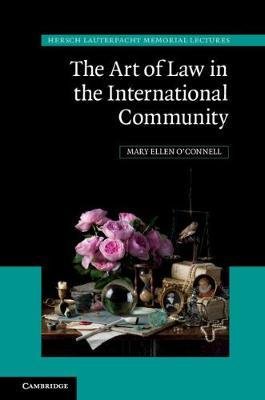
The impact was equally significant for individual scholars. Mary Ellen O'Connell, Jeremy Waldron, Peter Danchin, and others used CTI as a space to test ideas, challenge assumptions, and develop new approaches to questions of law, religion, and public order. Their subsequent books, lectures, articles, and teaching have contributed to debates about international law, constitutionalism, religious freedom, and democratic citizenship across the world.
Since 2007, the Center of Theological Inquiry (CTI) has played a distinctive role in shaping international conversations about law, human rights, religious freedom, and global governance. Rather than focusing on immediate policy advocacy, CTI has invested in the deeper intellectual questions that underlie legal systems: What gives law moral authority? How should religious traditions contribute to public life? Can international order be sustained without engaging the moral and spiritual commitments that guide much of humanity?Through sustained research, CTI has brought together theologians, legal scholars, human-rights specialists, and public intellectuals for almost two decades to address these questions in ways that have influenced scholarship, professional practice, the law globally, and public debate.
The origins of this work lie in CTI's Working Group on Theology and International Law, established under the leadership of William Storrar and co-chaired by legal scholar Jeremy Waldron and theological ethicist Robin Lovin. The group explored the historical and conceptual relationship between religion and international law, examining issues including human rights, war, poverty, environmental responsibility, and global justice. Participants argued that many contemporary legal frameworks had forgotten the religious and moral traditions from which international law emerged. By recovering those foundations, they sought to strengthen legal thinking about some of the most pressing challenges facing humanity. This group in turn lead to a three year, multi-million dollar, funded inquiry on Religion and International Law, with theologians, legal scholars, lawyers and ethicists working together on the pressing questions facing global legal systems and frameworks.


Lasting Legacy
CTI's work on religion and law demonstrates how theological inquiry can have meaningful public impact. By convening scholars across disciplines, faith traditions, and legal systems, the Center has helped reshape conversations about the moral foundations of law, the meaning of religious freedom, and the possibilities for coexistence in pluralistic societies. Through international partnerships, influential scholarship, global seminars, and networks of scholars whose work continues to reverberate across the law and public life, CTI has established itself as a catalyst for fresh thinking at the intersection of religion, law, and global affairs.
This was only possible because of the CTI approach, and that approach was only possible because of the funding and foresight of our founders. Would you like to be part of this kind of lasting legacy?