
CTI Launches a New Cohort on Hope for Civics and Politics
By Hasan Hameed
A little south of the busiest stretch of Nassau Street, just past the chic coffee shops and tourists taking selfies, I entered the building that is home to the Center of Theological Inquiry (CTI). I was greeted by sunshine streaming through the floor-to-ceiling windows, the pleasant scent of freshly brewed coffee, and the warm chatter of conversation as new and returning fellows gathered in the lounge for the first event of the academic year: a welcome orientation.
I was attending as CTI’s new Social Impact Fellow, through a program hosted by GradFutures at the Princeton Graduate School that allows graduate students to learn from and contribute to an external organization. As a doctoral candidate in History and Islamic Studies at Princeton, I have spent the last seven years living in and exploring a town brimming with intellectual activity. Beyond the University itself, Princeton is home to the Institute for Advanced Study and Princeton Theological Seminary, both independent institutions with distinguished intellectual traditions of their own. CTI, I had recently discovered, was another independent institution dedicated to the pursuit of knowledge—but with a distinctive mission of its own.
That mission was laid out in remarkably candid terms by CTI’s Director, Professor Tom Greggs. Now beginning his second academic year as Director, Dr. Greggs emphasized CTI’s unusual place among institutes for advanced study. There are, by some counts, 96 such institutes around the world; CTI is the only one dedicated specifically to theology. That does not mean that CTI is home only to theologians. Fellows come from disciplines ranging from theology and religious studies to anthropology and sociology, and that interdisciplinarity was visible among those gathered in the room. What distinguished the Center, as Tom Greggs described it, was its commitment to advancing theological inquiry within the academy while also asking what theology might contribute to the wider world.
The orientation made clear that this mission rests on a particular vision of intellectual community. Scholarship is at its center: fellows gather each Tuesday for a roundtable discussion of a pre-circulated paper by one of their colleagues, followed by lunch together. But community is also cultivated in less formal ways, from a daily coffee break to family-friendly gatherings at the Director’s home. During the orientation and the conversations that continued over lunch, I could already sense an unusual warmth and optimism. Here was a group of scholars working on a range of different questions, but sharing a conviction that theological inquiry still has something consequential to contribute—to one another, to the academy, and to the world beyond it.
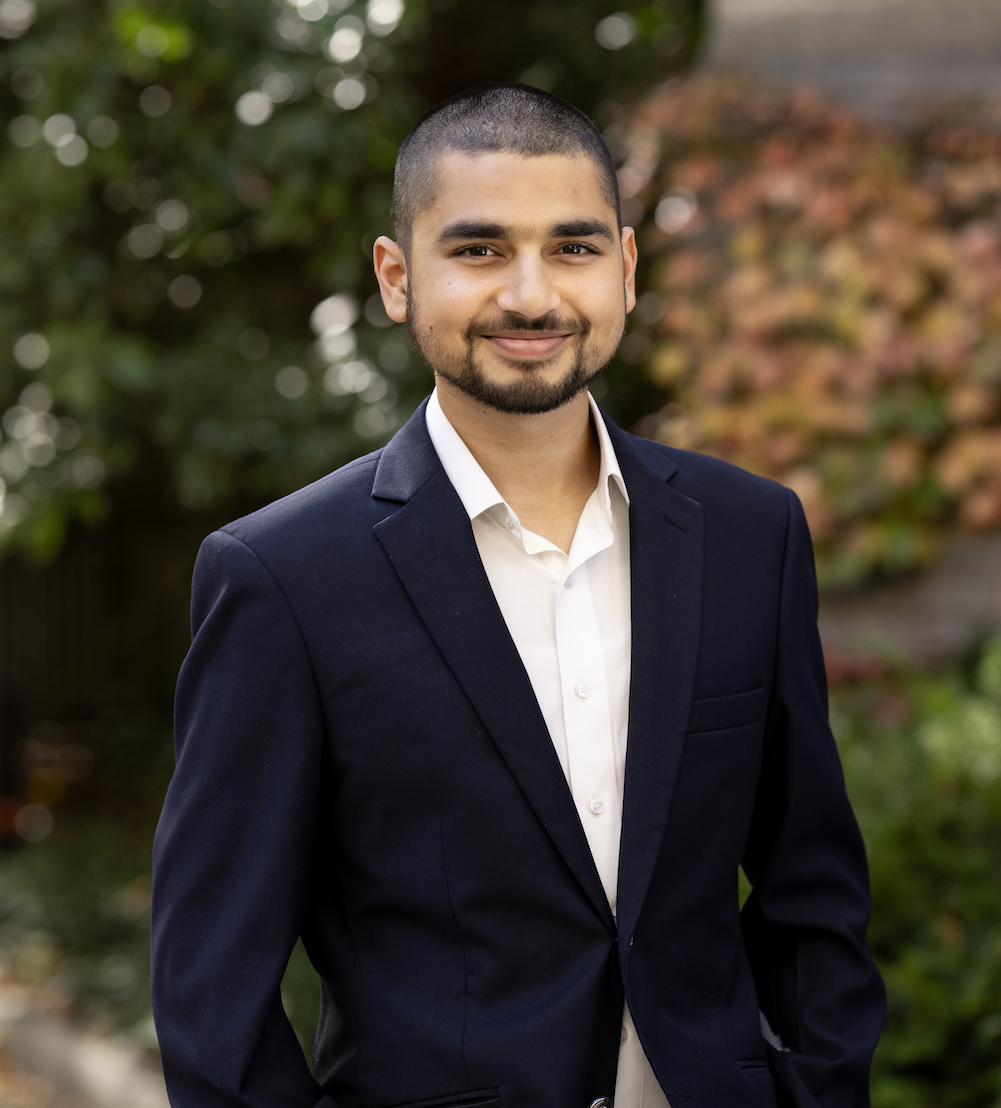
Hasan Hameed
Social Impact Fellow at CTI
Hasan Hameed is a Social Impact Fellow at CTI, in partnership with the Princeton University GradFutures Program. Working with the rich literatures of the Islamic world in Arabic, Persian, and Urdu, he studies how texts travel across regions and empires and shape ethical selves and communities. Hasan earned a Master’s degree at the University of Oxford and is currently pursuing a PhD in History and Islamic Studies at Princeton University. As a Social Impact Fellow, he is excited to help expand CTI's public programming.