
On October 22, the Center of Theological Inquiry welcomed Christian theologian and ethicist David Cunningham to share his latest reflections on the nature of work and vocation through a Trinitarian lens. Explicitly framing his remarks as an examination of, rather than a lecture on, two aspects of the work he has done throughout his theological career, Cunningham invited attendees to consider how the triune nature of God shapes our approach to work and reimagines our concept of “calling.”
Cunningham offered a fresh understanding of vocation rooted in the doctrine of the Trinity. He began with a historical overview of the meaning of vocation, from its deep connections to religious life during the medieval period to our modern, common identification of vocation as everyday work. Because our callings originate from a triune God in relationship and communion, Cunningham presented a Trinitarian view of vocation, where vocation is sustained through a divine source, a corporeal enactment, and a community of support.
As Executive Director of the Network for Vocation in Undergraduate Education (NetVUE), a program of the Council of Independent Colleges (CIC), Cunningham helps colleges include vocational discernment alongside career preparation. Cunningham highlighted how colleges also form vital spaces for communal discernment because students are in constant community. He defined vocational discernment as a constantly evolving reality, extending through time and space, to fit the changeability of our work lives. Rather than a single, static, unidirectional command, vocation is relational and in motion—as is God.
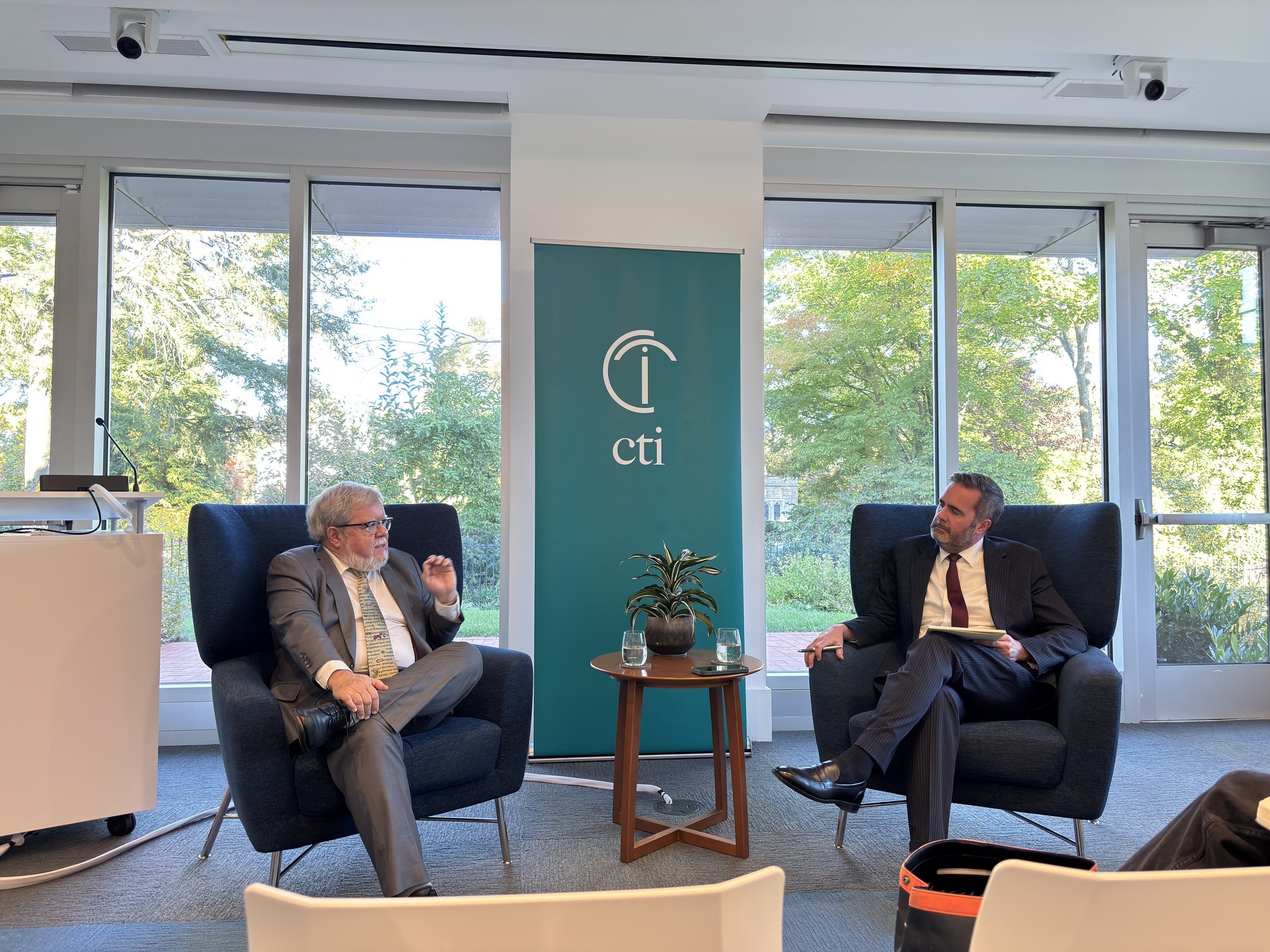
Following his presentation, Cunningham and CTI Director Tom Greggs engaged in a thoughtful fireside chat about the communal nature of vocation. They considered how our calling can be formed through suggestions or influence from others and discussed the virtue of polyphony in vocation, where simultaneous vocations may be possible.
A provocative Q&A broadened the discussion as CTI members probed practical difficulties such as “blocked” callings, competing simultaneous vocations, and the complexities of interfaith dialogue involving Trinitarian concepts.
Cunningham’s reflections and the rigorous discussions they sparked among CTI’s visiting scholars show what a theological approach to education, economics, and society looks like in action. These conversations are sharpening and amplifying critical ongoing work supporting undergraduate vocational discernment and demonstrate how theological inquiry is informing the broader public square.