
Exploring Hope Across Disciplines: Celia Deane-Drummond Visits CTI
Do animals have the faculty of hope? What is the difference between hope and optimism? How do different types of intellectuals—biologists, psychologists, philosophers, and literary critics—understand the origins and value of hope? Can Christian theology—specifically the teachings of Thomas Aquinas—offer insights into hope that these other disciplines cannot? Such wide-ranging questions animated a packed seminar room at the Center of Theological Inquiry on Monday morning during a visit by Dr. Celia Deane-Drummond.
Deane-Drummond’s intellectual trajectory offers a glimpse into the breadth of her interdisciplinary engagement. Having studied natural sciences at Cambridge and earned a doctorate in plant physiology from the University of Reading, she went on to pursue theological studies, receiving a second doctorate from the University of Manchester. She is now based at the University of Oxford, which recently conferred on her the title of Professor of Contemporary Catholic Theology, through its prestigious Recognition of Distinction exercise. In 2012–13, she served as a senior research fellow at CTI as part of an inquiry on evolution and human nature. Returning to CTI, she shared a chapter on hope from her recently published book, Morality’s Future and the Transcendent, along with a short essay on Josef Pieper’s account of hope.
In her chapter, Deane-Drummond distinguishes hope from optimism: while optimism assumes that things will turn out well, hope can persist even in the face of considerable uncertainty. Drawing on Thomas Aquinas, she also explores the possibility that nonhuman animals possess a form of hope. Although she questions aspects of Aquinas’s explanation in light of contemporary scientific knowledge, she suggests that animals may possess forms of hope appropriate to their cognitive capacities. Medieval theology and contemporary science, she shows, have much to learn from one another.
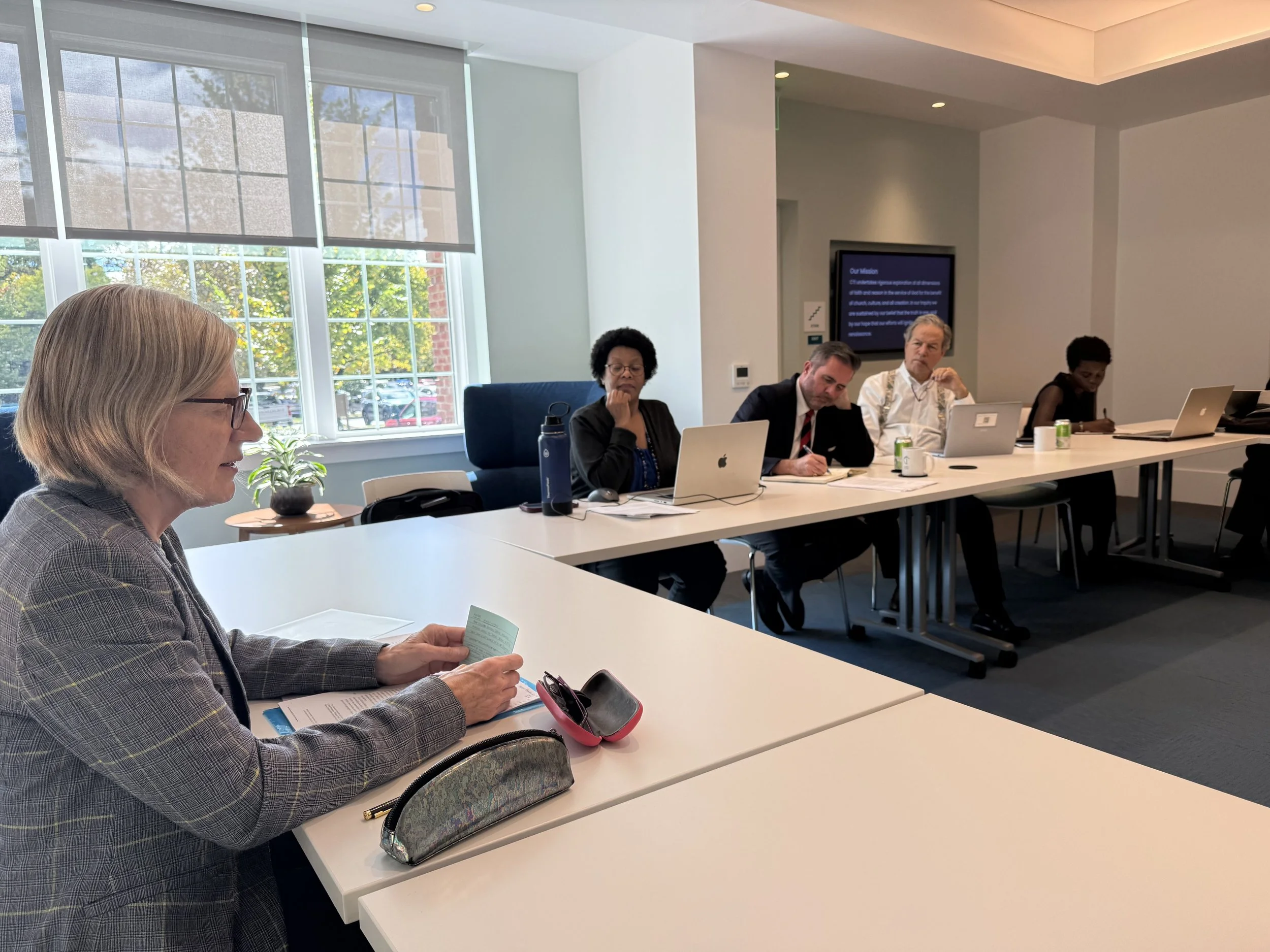
Ambitious scholarship inevitably invites a wide array of critiques. Not surprisingly, Deane-Drummond’s writings also generated lively debate among the CTI community. How relevant is Thomas Aquinas’s account of hope to our times? Did the accounts of hope she examined adequately reflect the experiences of those outside privileged academic circles? In addressing these questions, Deane-Drummond’s responses underscored the value of interdisciplinary exchange on issues of theological and sociopolitical importance. More broadly, the discussion highlighted the dynamic relationship between writing and conversation: how published scholarship generates debate, which in turn inspires further reflection and writing. Such exchanges lie at the heart of CTI’s mission to advance understanding of some of the most contested—and meaningful—questions of our times.
—Hasan Hameed, Social Impact Fellow at CTI